
Base Preparation Launceston
What's underneath the asphalt or concrete matters more than what's on top. A properly compacted base means the surface lasts 25+ years. A poorly compacted base means ruts, cracks and sinking within 3 years.
We do base preparation as part of our asphalt jobs, and as a stand-alone service for builders and concreters who want the base done right before they pour.
Road-base sourced from local Northern Tas quarries, compacted to 95%+ density, falls set for drainage, ready for asphalt or concrete lay.
Why it matters
- The single most important factor in long-term asphalt or concrete life
- 95%+ compaction density = stable sub-base that doesn't settle
- Proper falls (1:50 to 1:80) = drainage that prevents water sitting under the surface
- Local-sourced road-base = correct gradation for Tasmanian conditions
THE PROCESS
How we do it
Site assessment
Check existing ground, identify any soft spots or fill that needs removal.
Strip + excavate
Remove topsoil, organic matter and any unstable material to a stable subgrade.
Subgrade compaction
Compact native ground or replacement subgrade to ensure stable platform.
Road-base supply + spread
Quarry-sourced road-base material spread to 100–150mm depth depending on use.
Compact to spec
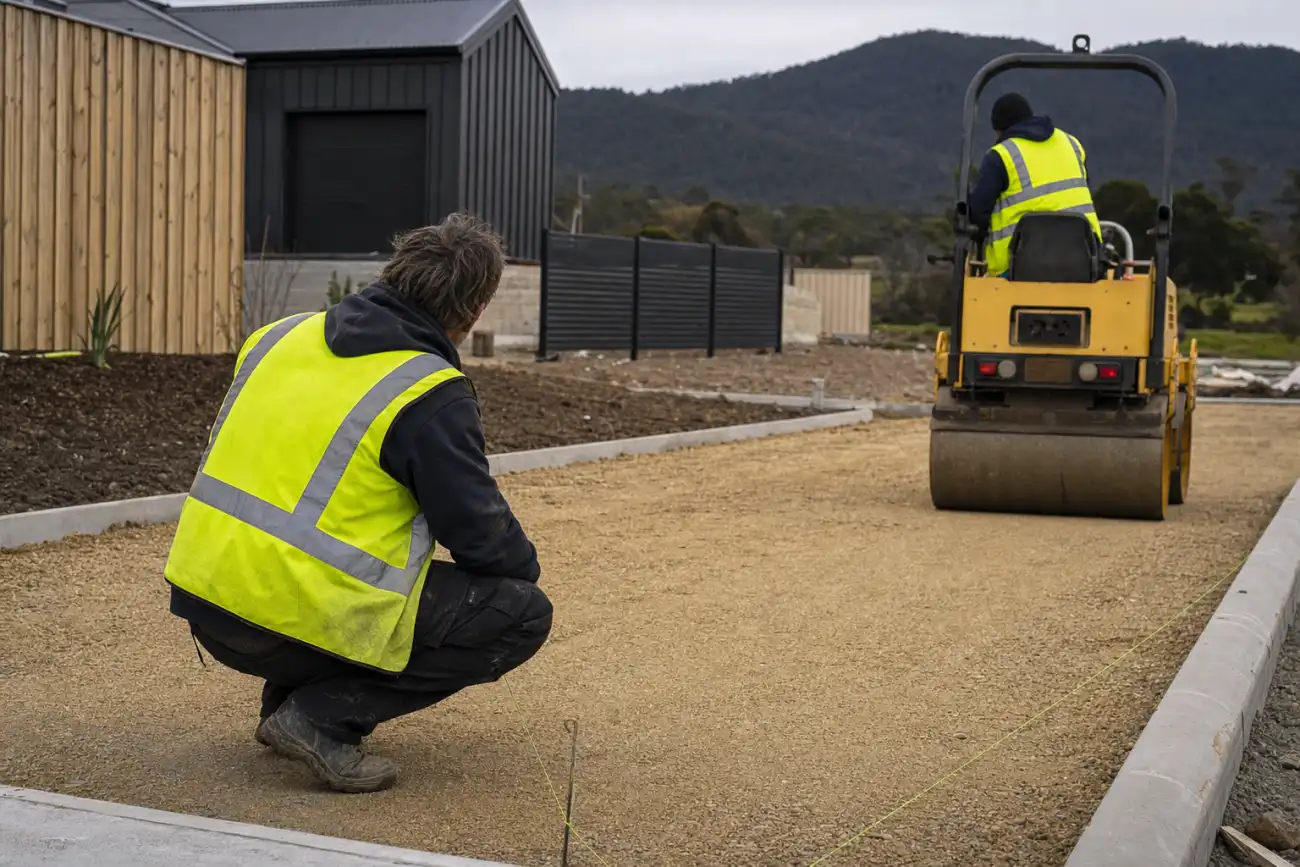
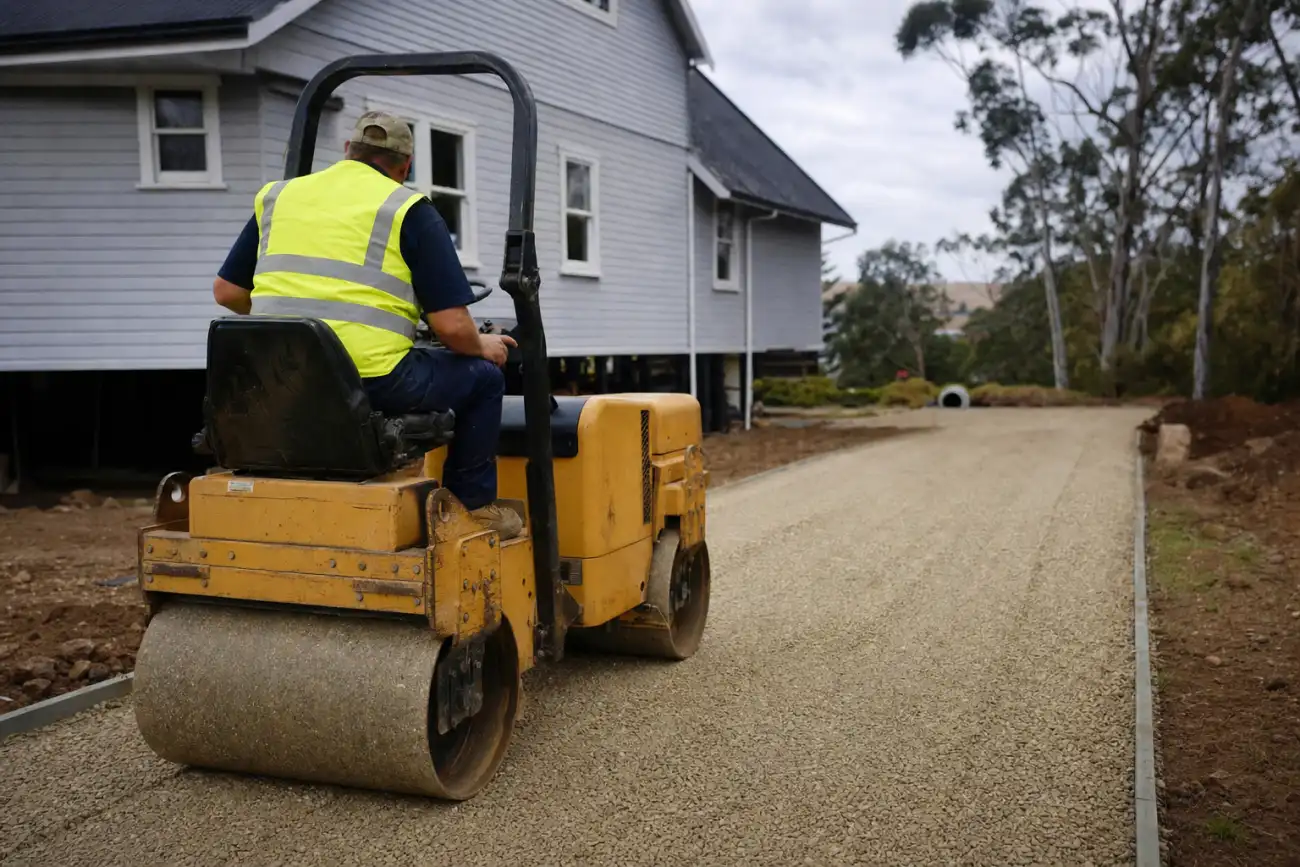
Vibratory roller compaction in layers, density tested where required.
Set falls + finish
Final grading to ensure correct drainage falls. Ready for asphalt or concrete.
COMPARISON
How it stacks up
The base under your asphalt is more important than the asphalt itself. Three common sub-base materials and what each is actually good for.
| Feature | Crushed road-base (FCR) | Recycled crushed concrete | Subgrade-only (no imported base) |
|---|---|---|---|
| Cost per m³ | Standard | Lower | Lowest |
| Bearing capacity | Excellent | Very good | Variable, depends on soil |
| Compactable to | 100% MMDD | 98% MMDD | Native compaction |
| Best for | All standard driveways and carparks | Cost-conscious jobs, light traffic | Footpaths only, never under vehicle loads |
| Drainage | Free-draining | Free-draining | Depends on subgrade |
| Tasmanian sourcing | Local quarries, abundant | Recycled from demolition | Existing site material |
| Council acceptance | Yes, all jobs | Yes for residential | Footpaths and light pedestrian only |
AFTERCARE
Signs the base prep was done right
You don't maintain a base directly, but you can spot whether yours was done properly by what happens above it over the years.
Year 1: even surface
If the asphalt above is showing rutting or depressions inside the first year, the base wasn't compacted properly. Should be flat with no dips wider than a marble.
Year 2-5: no edge collapse
Driveway edges that crumble or slope away from the road indicate either undersized base depth or poor edge restraint. A good base prep includes a 50mm wider footprint than the asphalt above for edge support.
After heavy rain
Water pooling on the asphalt after rain means falls weren't set correctly during base prep. Should sheet off to the road within minutes of the rain stopping.
Tree roots
If tree roots are lifting the asphalt within 5-7 years, the original base depth was too shallow. Proper base prep includes a root barrier where adjacent trees are mature.
Settlement around utility lids
Lids that have dropped below the surrounding asphalt mean the trench reinstatement under them wasn't compacted in layers. A good base prep over a service trench is done in 150mm lifts.
PRICING
What it costs in Launceston (2026)
- $Standard residential base prep (driveway): $25–$45/m² depending on excavation depth
- $Commercial base prep (carpark): $30–$55/m² depending on access and depth
- $Stand-alone base prep (no asphalt or concrete lay): minimum job $1,200
- $Excavation surcharge (over 200mm): add $20–$35/m² for deeper digs
- $Material disposal: $40–$90 per cubic metre of removed material
Site-specific factors change every quote. Get the price in writing before you sign anything.
FAQ
Base Preparation, common questions
Can I do my own base prep and just get you to lay the asphalt?+
Possible but we'd need to inspect and re-compact if anything's not to spec. Often easier and cheaper to let us do the lot. We won't lay asphalt on a base we haven't approved.
What's the difference between road-base and crushed rock?+
Road-base is a graded mix of crushed rock + fines designed for compaction. Crushed rock alone (single-size) won't compact properly. For driveways and roads, always road-base.
How deep should the road-base layer be?+
Residential driveway (passenger cars): 100mm minimum. Heavy vehicle driveway: 150mm. Carpark: 150–200mm. Road: 250–300mm.
Do you compact to standard density?+
Yes, 95%+ Modified Maximum Dry Density (MMDD) for residential, 98% for commercial. Density test certificates available on request.
Can you do base prep for concrete (not asphalt)?+
Yes, same process. Concrete benefits from the same base prep as asphalt. Many concreters sub-contract base prep to us.
READY TO START?
Get a free quote
We come out, have a look, give you a real number in writing within 48 hours. No mucking around, no obligation.