
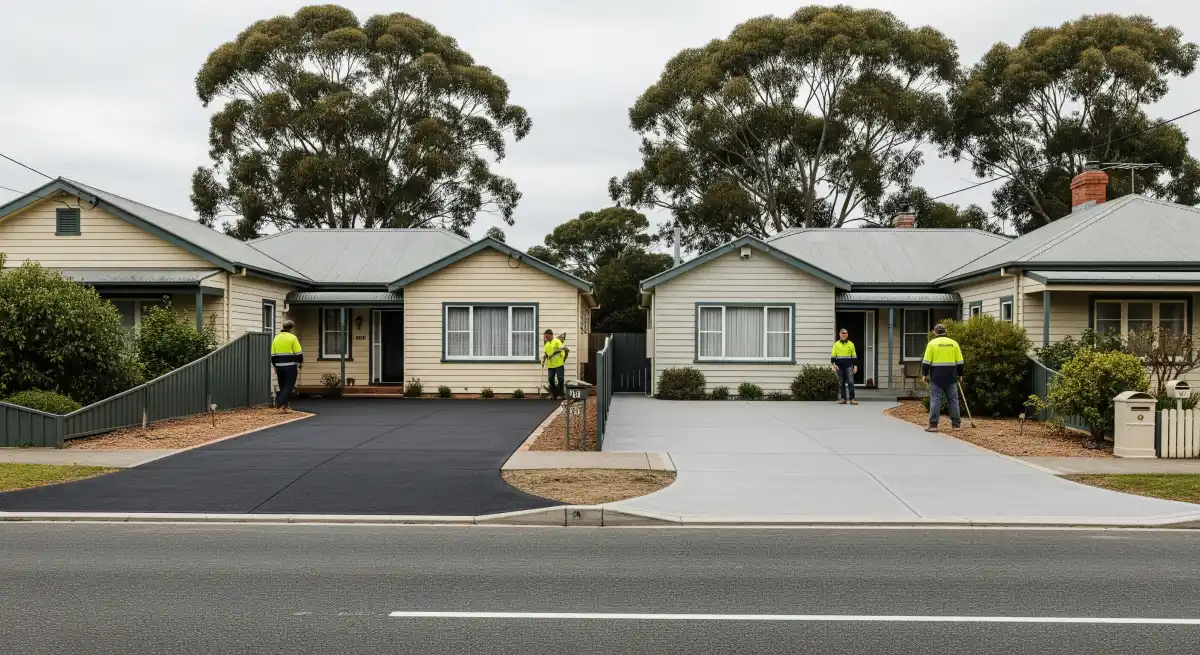
Asphalt vs Concrete Driveways in Tasmania: Cost, Lifespan, and Which Wins
AI Overview
In Tasmania, asphalt driveways typically cost 40-60% less per square metre than concrete, are ready to drive on in 24-48 hours instead of 7-10 days, and weather the Tasmanian cold-cycle climate as well or better. Concrete lasts longer (30-40 years vs 20-25 for asphalt) but is significantly harder and costlier to repair when sections fail. For most Launceston residential properties, asphalt is the better practical choice.
Key Highlights
- →Asphalt: 40-60% cheaper per m² than concrete, installed in 1 day vs 1 week
- →Concrete: 30-40 year lifespan vs asphalt's 20-25 years
- →Repairs: asphalt patches blend in, concrete repairs are always visible
- →Cold weather: both work in Tasmania but asphalt has a wider pour window
- →Look: asphalt = clean modern black, concrete = stark grey-white
- →For most Launceston driveways under 100m², asphalt wins on lifecycle cost
Asphalt or concrete is the most common question we field on a residential driveway quote. Both materials work in Northern Tasmania. Both last decades when laid properly. Both can fail in 3 years when laid badly.
The honest answer is that the right choice depends on what you value, budget, lifespan, repairability, look, and how the driveway interacts with your house. This guide walks through each factor from the perspective of a contractor who lays both.
Cost per square metre installed
Asphalt is the cheaper of the two by a significant margin. For a standard residential driveway in Launceston, asphalt sits around $50-80 per square metre supplied and laid. Concrete runs $90-150 per square metre depending on finish (broom, exposed aggregate, stencilled).
On a typical 50m² driveway, that's a $1,500-3,500 saving by going with asphalt. That money goes a long way toward proper base prep, which matters more than the surface material.
Lifespan in Tasmanian conditions
Concrete wins on raw lifespan. A properly laid concrete driveway in Launceston typically goes 30-40 years before needing significant work. Asphalt sits at 20-25 years, with a seal coat at year 7-10 extending that toward 30.
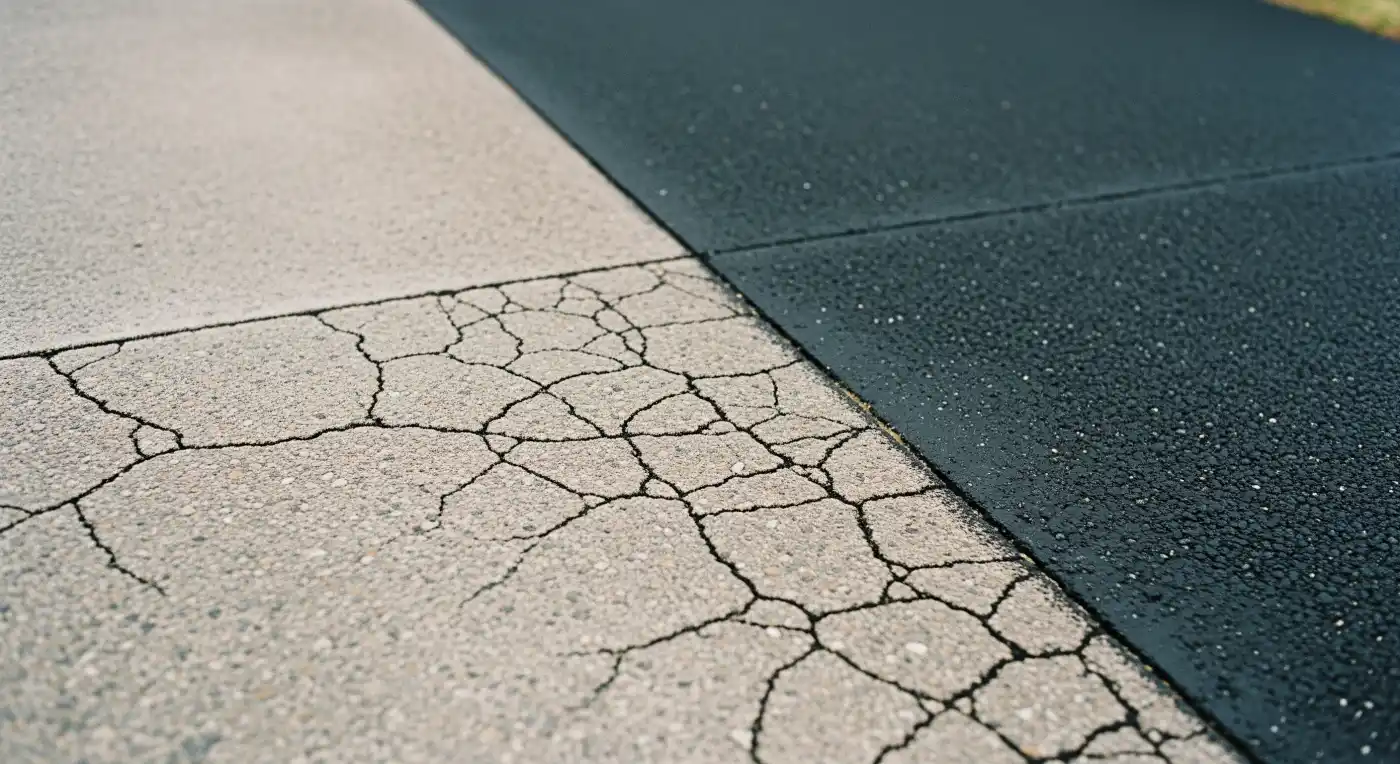
But Tasmania's freeze-thaw cycles (especially in elevated suburbs like Newstead and Riverside) work harder on concrete than asphalt. Concrete cracks at expansion joints. Asphalt flexes.
Repair when something fails
This is where asphalt pulls ahead in practical use. A pothole or section failure in asphalt is patched with hot mix, weathers in within 6 months, and is invisible. A failed concrete section means cutting out the slab, removing it, re-pouring, and waiting another week. The colour mismatch never fully blends.
Cold-weather pour window
Asphalt has the wider window. We can pour asphalt in Launceston year-round as long as the ground temp is above 5°C and conditions are dry. Concrete needs warmer, more stable conditions, ideally above 10°C with low risk of overnight frost.
For Tasmanian properties, that means asphalt can be scheduled most weeks. Concrete often pushes jobs from June-August into spring.
Look and feel
Subjective but worth raising. Asphalt is solid black, modern, fades to a charcoal grey over time. Concrete is stark white-grey, can be finished with exposed aggregate or stencils for visual variety, and ages with surface staining.
Most newer Launceston homes (post-2000 weatherboard or brick veneer) match better with asphalt's clean look. Heritage properties or rural blocks often suit concrete or even exposed aggregate.
Which to pick
If your priorities are price, fast turnaround, and the ability to repair invisibly: asphalt. If your priorities are maximum lifespan, you don't mind the look, and budget isn't tight: concrete. For most Launceston residential properties under 100m², we recommend asphalt.
FAQ
Common questions
Can I put asphalt over an existing concrete driveway?+
Yes, but with caveats. The concrete must be sound, free of major cracks, and bonded properly. A 25mm asphalt overlay over good concrete works well. Over failing concrete, the asphalt just fails too.
Does concrete or asphalt handle parked cars better?+
Both handle a typical car (about 1.5 tonnes) without issue when laid on proper base. For commercial vehicles, ute axle loads, or boat trailers, both need a thicker base — about 175mm for either material.
What about heat in summer? Does asphalt soften?+
In Tasmania, no. Asphalt softens above 60°C surface temp, which we very rarely hit even on the hottest Launceston days. Properties in mainland Australia have a different equation.
Is one easier to seal?+
Asphalt by a long way. Asphalt seal coats are a regular 5-7 year maintenance step and add another decade to the surface. Concrete sealers exist but are cosmetic, they don't extend lifespan meaningfully.
KEEP READING
More from the crew
Got a job? Get a quote.
Free site visit, real prices, quote in writing within 48 hours.